.png)
-
Tuesday, March 31, 2026
-
10:00 AM EDT (Atlanta) | 7:00 AM PDT (San Francisco) | 3:00 PM BST (London)

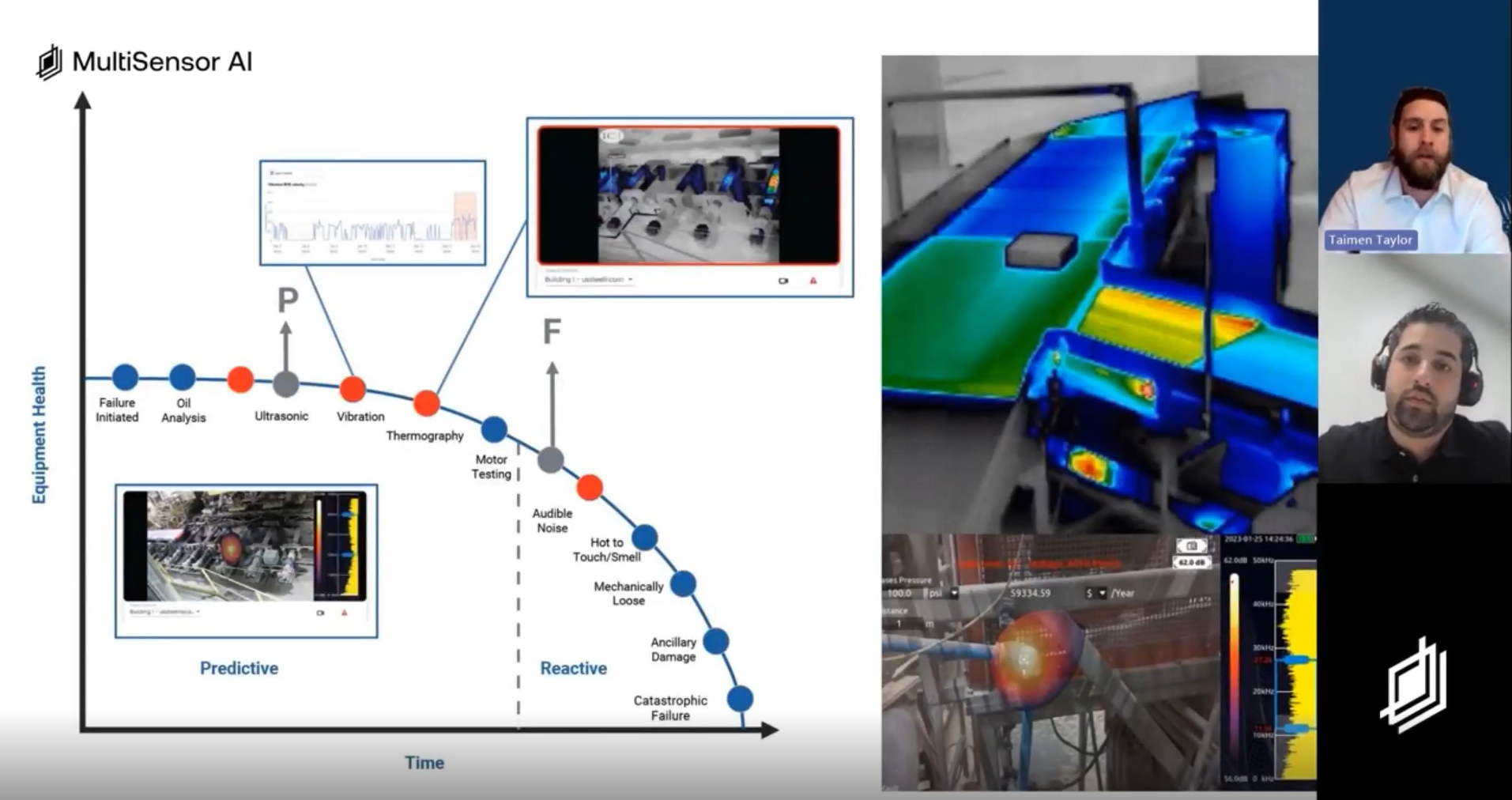
Stop reacting to “unexpected” failures. Start seeing what’s actually happening before they occur.
Most industrial and automated operations don’t fail suddenly—but it often feels that way. In reality, failures develop over time, with early signals that are missed, ignored, or simply invisible with traditional monitoring approaches. In this live session, James Newman, Senior Director of Product Enablement at MultiSensor AI, and Luke Grice-Lowe, Director of Reliability & Maintenance Programs (ex-Amazon), break down what’s really happening across motors, drives, conveyors, and electrical systems—and why so many teams only detect issues when it’s already too late.
As operations become more automated and uptime requirements tighten, the gap between when a failure starts and when it’s detected becomes more critical—and more costly. This session takes a practical, operator-first look at where that visibility gap comes from, and how leading teams close it.
You’ll walk away with a clearer understanding of how failures actually develop, where early signals appear, and what changes when you detect issues earlier in the failure curve—not after the event.
What You'll Learn
- Why failures feel sudden—and what’s actually happening before the event
- Where early degradation signals appear across mechanical and electrical systems
- Why inspection-based monitoring misses problems between checks
- What operators detect before motors, drives, and conveyors fail
- How earlier detection changes maintenance response and reduces downtime
Speakers
-
James Newman, Senior Director, Product Enablement — MultiSensor AI
25+ years in asset-intensive industries across product, operations, and digital strategy. James focuses on turning complex technologies into practical, real-world outcomes across AI, automation, and asset performance. -
Luke Grice-Lowe, Director of Reliability & Maintenance Programs — MultiSensor AI (ex-Amazon) - Maintenance and engineering leader with global experience supporting complex, automation-heavy operations. Led condition monitoring and reliability programs at scale, including at Amazon, with a focus on helping teams detect failures earlier and make better maintenance decisions.